
How does FIRE connect income, savings, and time in the US?
Learn how income, savings, and time work together in the FIRE strategy and why this approach is so effective in the US.
The Thinking Behind the FIRE Strategy
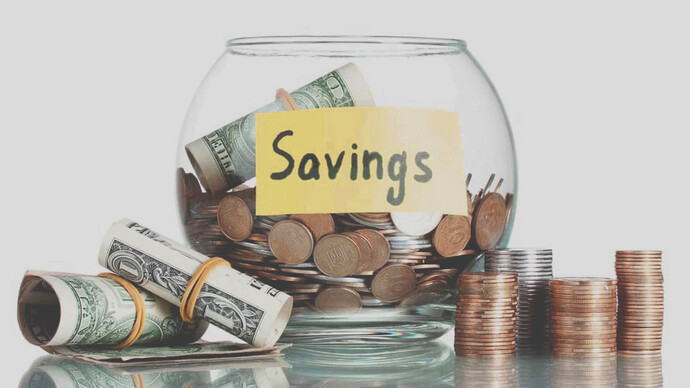
The FIRE movement, short for Financial Independence, Retire Early, has gained traction in the United States as a direct response to the increasingly strained relationship between work, money, and quality of life.
In a country where healthcare costs are high, public retirement benefits are limited, and work culture is intense, FIRE emerges as an alternative for those seeking greater financial autonomy throughout life.
More than an investment strategy, FIRE is a framework that logically connects three central elements of personal finance: income, savings, and time.
Understanding how these factors interact helps explain why FIRE works and why it has become so relevant in the American context.
The role of income in the FIRE strategy
In FIRE, income is the starting point of the entire strategy. Unlike the traditional view, where earning more often leads to spending more, FIRE treats income as a strategic resource to accelerate financial independence.
In the United States, this logic is especially viable due to the diversity of the job market, opportunities for salary growth, and the ease of generating additional income through freelancing.
Increasing income within the FIRE framework is not primarily about upgrading lifestyle, but about expanding saving capacity.
When expenses remain relatively stable, every income increase directly reduces the time required to accumulate enough assets to live off investment returns.
For this reason, many FIRE followers prioritize professional choices that offer higher financial growth potential in the short and medium term.
Savings as the central link between income and time
While income is important, the true engine of FIRE is the savings rate. It is the savings rate that directly connects how much you earn to how long you need to work.
In the traditional American model, saving between 5% and 10% of income is considered acceptable. FIRE inverts this logic, making the consistent saving of a significant portion of income a core priority.
The higher the savings rate, the lower the dependence on earned income and the faster capital accumulates.
This relationship is more decisive than investment returns themselves, especially in the early years.
In FIRE, saving is not seen as deprivation, but as a conscious trade-off between present consumption and future freedom. Every dollar saved represents less mandatory work time in the future.
Time as a strategic variable in FIRE
One of the most transformative ideas behind FIRE is the redefinition of time. Instead of linking retirement to age, FIRE ties retirement to the size of accumulated assets. This means time is no longer a fixed variable, but a direct consequence of financial decisions.
In the United States, where many people rely on private retirement vehicles such as 401(k)s and IRAs, this approach is especially relevant.
The earlier someone starts saving and investing, the fewer years are required to reach financial independence due to the power of compound interest.
At the same time, higher savings rates dramatically shorten the working period, even for those who begin later.
The connection between income, savings, and time
FIRE works because it creates a clear and measurable relationship between income, savings, and time. When income rises and expenses are controlled, the savings rate increases.
With a higher savings rate, wealth grows faster. With greater wealth, the amount of time required to work decreases. This simple logic removes reliance on market timing or complex investment strategies.
FIRE focuses less on “earning more” and more on “keeping more.” This mindset creates predictability and control, two essential elements in an economic environment like that of the United States, shaped by cycles, inflation, and uncertainty.
Conclusion
In the American context, FIRE connects income, savings, and time in a practical and rational way.
It shows that financial independence is not the result of luck, inheritance, or miracle investments, but of consistent decisions made over time.
By treating income as a tool, savings as a lever, and time as the most valuable asset, FIRE offers something rare in the modern world: choice.
More than retiring early, FIRE enables people to live with greater autonomy, security, and financial freedom at any stage of life.
Related content
Best Practices for Year End Portfolio Rebalancing
Learn how year-end portfolio rebalancing can help align your portfolio with your goals.
Keep reading * You will remain on the current site Best Practices for Year End Portfolio Rebalancing
Keep reading You will remain on the current website