
Wondering why your grocery bill is so steep? Discover the reasons behind it
Grocery bills have been climbing. Discover the factors behind rising food costs, which items are getting more expensive, and how to spot what's putting a strain on your budget.
Why your grocery budget isn’t stretching as far as it used to
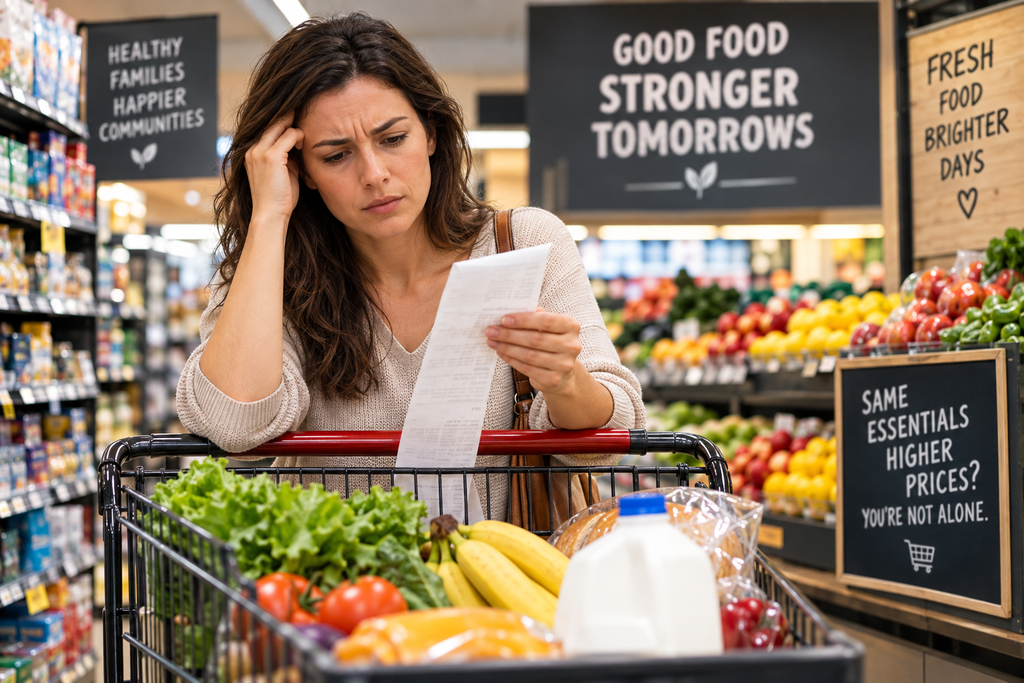
Your grocery bill remains high because food prices in the U.S. are still well above where they were before the pandemic, despite a slowdown in grocery inflation.
According to the U.S. Bureau of Labor Statistics (BLS), prices for food bought to eat at home were 2.2% higher compared to the previous year.
This means that a slower inflation rate doesn’t automatically translate to lower grocery costs. Instead, prices are just rising at a reduced pace.
For U.S. families already managing rent, utilities, transport, healthcare, and other daily bills, this difference is significant.
So, what keeps your grocery bill climbing? Multiple factors play a role, including the buildup of food price increases over time.
What’s Driving the High Grocery Costs in 2026?
Your grocery expenses remain elevated because food prices reflect several years of steady increases, with various categories rising at different paces.
The USDA Economic Research Service (ERS) predicts a 2.5% rise in food-at-home prices for 2026, though this forecast comes with some uncertainty.
It’s key to understand that the national average doesn’t capture the full picture.
Grocery inflation is easing, but food prices remain high
Inflation tracks how fast prices increase but doesn’t indicate if prices have dropped back to earlier levels.
For instance, if an item costs $5 and rises to $6, it stays at $6 even if inflation later hits zero.
This is basically the situation many shoppers across the U.S. are facing now.
According to NerdWallet’s review of BLS data, food prices in March 2026 were 33.4% higher than in March 2020, while average hourly wages rose 31.9% over that same span.
Bottom line: just because food inflation is slowing doesn’t mean grocery prices have dropped back to 2020 levels.
What’s Driving Up Grocery Costs?
Multiple factors can influence grocery prices at the same time.
The main challenge for shoppers is that different food categories don’t react to economic pressures uniformly or simultaneously.
Beef Prices Are Significantly Impacting Grocery Budgets
Beef clearly illustrates why some households face higher grocery bills.
The USDA ERS reports that beef and veal prices rose 9.4% in July 2026 compared to July 2025. Their forecast for 2026 predicts a 9.8% increase in these prices.
The USDA also noted that federally inspected beef production dropped by nearly 5% in July, tightening supply and pushing wholesale beef prices higher.
For households that often buy ground beef, steaks, or other beef items, this increase can impact their grocery spending more than the average inflation rate.
How transportation and energy expenses influence the food supply chain
Food doesn’t travel straight from farms to your kitchen table.
Instead, it moves through farms, processing plants, storage facilities, refrigerated transport, distribution hubs, and finally stores.
Each of these steps depends heavily on transportation and energy.
According to the BLS, in August 2026, the energy index was 16.3% higher than the previous year, with motor fuel rising 27.9%.
While energy prices do influence food costs, it’s inaccurate to blame all grocery price hikes solely on fuel expenses.
Still, transportation and energy expenses can increase costs at various points along the supply chain.
Which Grocery Prices Are Increasing the Most Quickly?
The categories with the steepest price hikes aren’t always the ones that make up the biggest share of each household’s shopping.
That’s why relying solely on the national grocery price index can give a distorted picture.
Nonalcoholic Beverages
According to the BLS, nonalcoholic beverages cost 3.7% more in August 2026 compared to the previous year.
For families who regularly buy bottled water, sodas, juice, or similar drinks, these steady price hikes can really add up throughout the month.
Fruits and vegetables
In August, the price of fruits and vegetables was 3.2% higher than the previous year, though prices fell slightly by 0.4% from July to August.
This highlights a key point about grocery prices: they can increase over the year even while dropping between consecutive months.
Egg Prices
Egg price changes highlight why it’s important to consider both short-term and long-term trends.
In August 2026, egg prices increased by 2.9%, yet they were still 23.0% lower than the previous year, based on NerdWallet’s data review.
If you see egg prices go up compared to last month, it doesn’t automatically indicate they are rising on an annual basis.
Why Does My Grocery Bill Seem Higher Than the Inflation Rate?
Your grocery expenses can rise more quickly than the national food-at-home inflation rate because the items you buy aren’t the same as those used in the national average calculation.
This is a key insight for anyone wondering, “Why does my grocery bill feel so high?”
Your food inflation experience depends on how and what you shop for
Picture two families. Household A primarily buys:
- Rice
- Pasta
- Dairy
- Chicken
- Store-brand products
Household B mainly purchases:
- Beef
- Fresh produce
- Branded snacks
- Beverages
- Specialty items
While both households face the same economic conditions, their grocery expenses can vary widely.
Your choice of food impacts your grocery costs just as much as the overall inflation rate.
Why the national CPI doesn’t reflect your personal grocery inflation
The BLS Consumer Price Index tracks price changes for a typical selection of goods and services.
It doesn’t reflect the precise inflation rate that your household actually experiences.
That’s why a 2.2% rise in national food-at-home prices doesn’t directly translate to your grocery bill increasing by the same amount.
How Much Should an American Family Budget for Groceries?
There isn’t a one-size-fits-all grocery budget that applies to every American household.
Factors like household size, age, where you live, dietary preferences, and shopping routines all influence how much you spend on food.
The USDA offers food-at-home guidelines that outline spending at various budget levels.
NerdWallet’s review of USDA data estimates that a family of four following the USDA’s Thrifty Food Plan spends about $1,013 each month, totaling over $12,000 yearly.
This amount should be viewed as a guideline rather than a strict spending cap.
A more useful question than “What should groceries cost?”
Rather than asking, “How much should my grocery bill be?”
Consider asking, “Which food categories are driving up my grocery costs?”
This approach gives you a clearer, more practical answer by linking overall food price trends to how you actually spend.
How Can You Lower a High Grocery Bill?
The most effective method to reduce a high grocery bill is to pinpoint which categories take up the largest share of your spending and focus on those first.
After tracking your spending for four weeks, identify which categories make up most of your expenses.
Check unit prices
The price on the shelf tag isn’t always the best indicator of value.
Look at the cost per ounce, pound, quart, or other standard unit to compare different sizes and brands effectively.
Buying a bigger package might offer a better unit price, but only if you’re sure you’ll use it all.
Plan meals using more affordable ingredients
USDA projections indicate that price changes vary widely across different food groups.
For instance, beef and veal prices are expected to rise much more sharply in 2026 compared to other types of protein.
This trend allows shoppers to be more adaptable when planning their meals.
When beef prices spike in a given week, consider focusing your meals on other protein options already on your list.
The aim isn’t to cut out foods you love.
Rather, it’s about preventing one pricey category from taking over your whole grocery spending.
Make smart use of discounts
Coupons, rewards programs, and cash-back deals can lower how much you actually pay at the store.
However, discounts only benefit your budget if they apply to items you intended to purchase anyway.
CNBC Select suggests tactics like using store promotions and adjusting your shopping patterns to help lower grocery expenses.
Bankrate has also reviewed grocery rewards programs and credit card options that can help reduce the cost of your everyday grocery buys.
Getting 20% off something you don’t actually need still means you’re spending money unnecessarily.
What Impact Does September Have on Grocery Spending?
September often increases strain on household food budgets as it brings back-to-school costs along with the start of fall routines.
Households might be purchasing more items for lunches, snacks, and beverages, while Labor Day events can lead to extra food shopping trips.
Back-to-school shopping often drives up food expenses
Returning to school can shift how a family shops for groceries each week.
Instead of buying just dinner items, families might also need to purchase:
- Lunch ingredients;
- Packaged snacks;
- Breakfast foods;
- Drinks;
- Portions suitable for school.
The simplest way to avoid these costs from sneaking into your budget is to plan for them in your grocery list before you shop.
Labor Day often causes a short-term rise in grocery spending
Labor Day fell on September 7, 2026.
Barbecues and gatherings often boost purchases of meat, drinks, snacks, and other food items.
Instead of counting these as part of your regular weekly grocery run, treat them as a distinct seasonal cost.
What Are Grocery Price Trends for the Rest of 2026?
The USDA projects that prices for food consumed at home will rise by about 2.5% during 2026.
The estimated increase ranges from roughly 1.7% to 3.3%, highlighting uncertainties in upcoming market conditions.
It’s key to understand that the USDA anticipates different grocery categories will experience varied rates of price change.
Categories like beef and veal, seafood, as well as fresh fruits and vegetables are expected to see price increases that outpace their usual historical trends.
Can shoppers expect grocery prices to drop?
Not really.
Slower inflation projections don’t mean grocery stores will revert to the price levels seen in 2019 or 2020.
A more useful question for managing your budget is whether specific food groups will keep rising and how much of your shopping list they make up.
How to Identify What’s Driving Up Your Grocery Costs
If you’re trying to figure out why your grocery bill is so high, follow these easy steps:
Step 1 — Review your last four shopping receipts
Check for items that have gone up in price repeatedly over time.
Step 2 — Figure out which categories you spend the most on
Estimate how much of your budget goes to meat, fruits and vegetables, dairy, drinks, and packaged goods.
Step 3 — Review the unit price
Use a consistent unit of measurement to compare different brands and package sizes.
Step 4 — Consider alternative options
If one type of item is costly, think about whether a different product might fulfill the same need for less money.
Step 5 — Review your budget again next month
Food costs fluctuate.
What seems like a smart swap today might not be a good choice next month.
The aim isn’t to forecast grocery prices exactly, but to adjust your budget according to the prices you actually encounter.
Author’s Perspective
When your grocery total feels steep, it’s tempting to think every item in the store has jumped in price equally.
The overall food-at-home index rose 2.2% compared to last year, though price changes varied widely across different food groups.
Items like beef, beverages, and fresh produce can impact a household’s grocery expenses far more than the average national figures indicate.
So, the best initial approach isn’t always to slash your entire grocery spending.
Recommended Content
Loan Rate Too High
Find out how the September 30 deadline can lower interest rates on eligible federal student loans through automatic payments.
Continue reading * You will remain on the current website