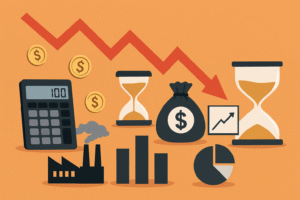
Selic rate drop: wait or renegotiate your debts now?
Should you renegotiate debt after a rate cut? Learn when refinancing, consolidation, or waiting makes the most financial sense in 2026.
Does the Selic rate drop help with debt renegotiation? Understand why

Interest rates influence nearly every form of borrowing in the United States, from credit cards and personal loans to mortgages and auto financing.
When rates start falling, many consumers ask the same question: Should you renegotiate your debts now or wait for even lower rates?
In June 2026, that question has become especially relevant as Americans continue to manage elevated borrowing costs.
Persistent inflation concerns, and uncertainty surrounding future Federal Reserve decisions.
Quick Answer: Should You Wait or Renegotiate Now?
For most borrowers, the answer depends on three factors the type of debt you hav, your current interest rate and whether you qualify for better terms today
Renegotiating now often makes sense if:
- You carry high-interest credit card debt;
- Your credit score has improved since you borrowed;
- You qualify for a lower APR today;
- Your monthly payments are creating financial stress.
Waiting may make sense if:
- Your debt already carries a relatively low fixed rate;
- Refinancing costs are significant;
- You expect substantial rate reductions in the near future.
The key takeaway is that borrowers should focus on available savings today rather than trying to perfectly time future rate movements.
Why This Topic Matters in June 2026
The Federal Reserve kept its benchmark rate unchanged at its June meeting while signaling that inflation remains a concern.
Several major financial institutions have recently delayed their forecasts for future rate cuts, with some analysts now expecting no reductions until 2027.
This creates uncertainty for consumers who are waiting for borrowing costs to decline.
Meanwhile:
- Credit card interest rates remain historically high;
- Personal loan rates remain elevated;
- Mortgage rates continue hovering above 6%.
For households carrying expensive debt, waiting indefinitely for lower rates could cost more than acting now.
How Rate Cuts Affect Different Types of Debt
Credit Card Debt
Credit cards are usually the first borrowing products affected by Federal Reserve policy because most cards use variable APRs.
When rates decline, card issuers may gradually reduce APRs. However, reductions are often modest and may take time to appear.
NerdWallet notes that a Fed rate cut does not automatically or immediately translate into lower borrowing costs for consumers.
For borrowers paying 20% or more in interest, waiting for small future reductions may not be the best strategy.
Personal Loans
Personal loans often provide a fixed interest rate and predictable repayment schedule.
According to Bankrate, average personal loan rates remain around 12.28% in June 2026.
Although borrowers with excellent credit can qualify for significantly lower rates.
If you currently have:
- High-interest credit card balances
- Multiple unsecured debts
- Variable-rate obligations
A debt consolidation loan may reduce both interest costs and monthly payment complexity.
Mortgage Debt
Mortgage rates do not move in lockstep with Federal Reserve decisions.
Although Fed policy influences borrowing conditions, mortgage rates respond to broader economic expectations and bond market activity.
Current 30-year fixed mortgage rates remain above 6.5% nationally.
Homeowners considering refinancing should evaluate potential savings carefully because refinancing includes closing costs.
Signs You Should Renegotiate Your Debt Now
Your Credit Score Has Improved
A stronger credit profile may qualify you for:
- Lower personal loan rates
- Better refinancing offers
- Improved debt consolidation options
Bankrate notes that borrowers seeking the most competitive debt-consolidation rates often need strong credit scores, frequently above 740.
Your Current Interest Rate Is Significantly Above Market Rates
Compare your existing rates with current market offers.
If your current debt costs substantially more than available alternatives, refinancing may provide immediate savings regardless of future rate forecasts.
You Need Cash Flow Relief
Reducing monthly obligations can:
- Improve budgeting flexibility
- Prevent missed payments
- Lower financial stress
This can be especially important during periods of economic uncertainty.
Signs You May Want to Wait
Refinancing Fees Are Too High
Every refinancing decision should include a break-even calculation.
For mortgages especially, refinancing costs can offset interest savings if rates decline only slightly.
Some mortgage experts suggest that a reduction of approximately 0.75 percentage points often creates a stronger refinancing case than smaller declines.
You Already Have a Low Fixed Rate
Borrowers who locked in low fixed rates during previous years may gain little from refinancing today.
Your Financial Profile Is Improving Rapidly
If you expect a substantial increase in your credit score within the next few months, waiting could unlock better offers.
Debt Consolidation vs. Waiting for Lower Rates
Many Americans face a choice between consolidating debt now or waiting for future rate reductions.
| Factor | Consolidate Now | Wait for Lower Rates |
|---|---|---|
| Immediate savings | Yes | No |
| Monthly payment simplification | Yes | No |
| Future rate uncertainty | Reduced | Increased |
| Opportunity cost | Lower | Higher |
| Risk of missing better offers | Possible | Possible |
Bankrate highlights that debt consolidation can lower interest costs, simplify finances, and create a structured payoff timeline when borrowers qualify for competitive rates.
June 2026 Financial Trends Influencing Borrowers
Several current trends are shaping borrowing decisions:
Persistent Inflation Concerns
Inflation remains above the Federal Reserve’s long-term target, creating uncertainty around future monetary policy.
Elevated Consumer Borrowing Costs
Average borrowing costs remain significantly higher than many consumers became accustomed to during the low-rate era of 2020-2021.
Summer Spending Season
June marks the beginning of peak summer travel and discretionary spending for many American households.
Consumers carrying revolving debt often see balances increase during summer vacations, making debt management especially important during this period.
What Leading Financial Publishers Are Saying
Major personal finance publishers generally agree on several themes:
NerdWallet
NerdWallet emphasizes that rate cuts do not immediately translate into lower borrowing costs.
Encourages consumers to evaluate refinancing opportunities based on their individual financial situation rather than waiting for perfect market timing.
Bankrate
Bankrate continues to place great emphasis on debt consolidation and personal loan comparisons.
In addition, you can still rely on strategies to reduce high-interest debt through refinancing and structured payment plans.
Market Coverage
Current market reporting shows increasing uncertainty around future Fed cuts, reinforcing the importance of evaluating today’s opportunities rather than relying solely on future forecasts.
Author’s Opinion
Many consumers make the mistake of treating debt decisions like stock market predictions.
The reality is that nobody knows exactly where rates will move next.
A better approach is to compare your current borrowing costs against the savings available today.
If refinancing or consolidating debt creates meaningful savings, improves cash flow, or accelerates repayment, those benefits are real and immediate.
Waiting for future rate cuts can sometimes produce additional savings, but it can also mean paying unnecessary interest while hoping for a market outcome that may never arrive.
The strongest strategy is often to make the best decision based on today’s numbers rather than tomorrow’s forecasts.
Related content
Treasury Bills vs CDs
Compare Treasury Bills and CDs to understand which option pays more and fits short-term savings goals today.
Keep reading * You will remain on the current website