
Could your savings account be quietly losing value without your awareness?
Why your savings might actually be shrinking in value despite an increasing balance, and the roles inflation, APY, taxes, and fees play in shaping your true earnings.
Caution: Your Savings Account Could Be Costing You Money
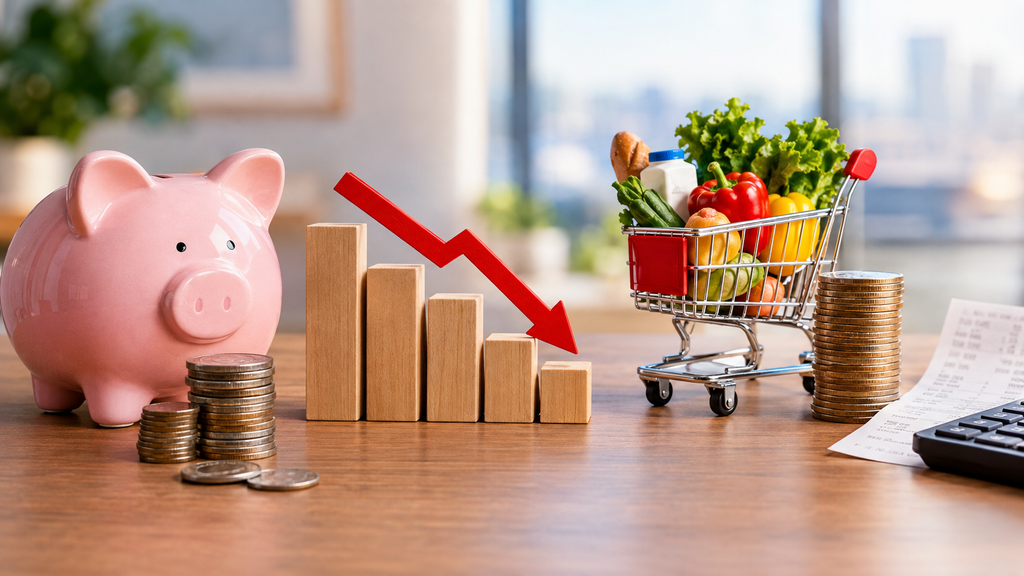
If the balance in your savings account increases each month, it’s natural to think your funds are working well for you.
However, just because the dollar amount grows doesn’t mean your buying power is improving.
So the key question isn’t only whether your savings account is earning interest.
What really matters is: Does the interest you earn on your savings sufficiently preserve your money’s purchasing power after accounting for inflation and taxes?
Why Might Your Savings Account Lose Value?
Your savings account can decline in real value when the interest rate it pays is less than the pace at which prices are rising.
While your bank statement might reflect a slightly higher balance, if the cost of everyday items climbs faster than your savings grow, your money’s purchasing power actually decreases.
- A simple way to think about it is: Real return ≈ savings APY − inflation rate;
- For a more precise calculation: Real return = (1 + APY) ÷ (1 + inflation) − 1
As an example, if your savings account offers a 0.64% APY and inflation sits at 3.4%, your estimated real return before taxes is roughly -2.67%.
Your dollar amount might not have dropped, but its buying power has diminished.
Your Savings Account APY Could Be Too Low
A major cause of lost purchasing power for many Americans is simply earning insufficient interest on their cash.
Average savings account rates vary depending on the source and methodology. NerdWallet lists 0.37%, while Bankrate’s September 24 survey shows 0.64%.
Both numbers highlight the same point: the typical savings rate is much lower than the current 3.4% inflation rate.
This difference becomes especially critical at major traditional banks, where savings accounts often offer very low APYs.
How Inflation Quietly Erodes Your Buying Power
Inflation doesn’t take money out of your account; rather, it diminishes the value of each dollar you hold.
According to the most recent U.S. Consumer Price Index figures for August 2026, prices increased by 3.4% compared to the prior year.
Energy costs played a key role, with gasoline prices climbing 3.9% just in August.
These real-return numbers are calculated using a more accurate inflation adjustment and are rounded for clarity.
This chart also clarifies why earning interest on your account isn’t the same as seeing your money grow in purchasing power.
What’s Happening with Savings Account Rates This September?
This September, savers saw something unexpected: the Federal Reserve raised its key interest rate instead of lowering it.
On September 16, 2026, the Federal Open Market Committee bumped up the federal funds target range by 0.25 percentage points to 3.75%–4.00%.
The Federal Reserve noted that inflation remains high and that the rate increase aims to help bring inflation back down to its 2% target.
Savings rates typically react to shifts in the federal funds rate, so this adjustment can influence the interest banks offer on deposits.
NerdWallet shared that several high-yield savings accounts raised their interest rates in response to the September 16 Federal Reserve announcement.
However, this does not guarantee that all savings accounts will become more attractive or competitive.
Traditional Savings Accounts and High-Yield Accounts Differ Significantly
The gap between a traditional savings account and a high-yield savings account can be quite significant.
On September 23, CNBC Select highlighted that the highest high-yield savings rate it found was 4.21% APY, while the national average stood at just 0.37%, meaning the top rate was over 11 times higher than the average.
Using a different approach, Bankrate’s survey from September 24 placed the national average savings rate at 0.64% APY.
It’s important to recognize why these figures differ: average rates vary depending on which banks and methods each survey uses.
The key takeaway is straightforward: don’t assume your bank’s APY is competitive simply because it’s labeled a savings account.
This comparison isn’t a prediction. It’s intended to show how the APY you choose can significantly impact the interest your savings earn.
Can Taxes Reduce the Value of Your Savings Account?
Yes. Even if your savings account beats inflation before taxes, your net return after taxes might still be lower.
Interest earned on bank accounts is usually taxed as ordinary income according to federal tax laws.
The IRS treats interest from bank accounts as taxable income and banks typically report eligible interest payments on Form 1099-INT.
Your APY Doesn’t Always Reflect Your Actual After-Tax Earnings
Imagine your savings account offers an APY of 4.00%.
Assuming a 22% federal marginal tax rate and excluding any state taxes, your interest income after federal taxes would be roughly:
4.00% × (1 − 0.22) = 3.12%
So, if inflation stands at 3.4%, your estimated after-tax return would actually be below zero.
This doesn’t mean a 4% savings account is a poor choice. Instead, it highlights why focusing solely on APY can be misleading.
Could Fees Be Cutting Into Your Savings Account Earnings?
Interest isn’t the only figure you should watch.
Monthly maintenance fees, penalties for low balances, or other charges can reduce or even wipe out the interest you earn.
For instance, a savings account with 0.50% APY on $10,000 would generate about $50 in interest annually before taxes. However, a $5 monthly fee adds up to $60 yearly, which exceeds the interest earned.
This is why you should judge a good savings account by its net returns, not just the APY it advertises.
Review These Key Savings Account Features
Before you decide if your account is competitive, consider these factors:
- APY: What interest rate does the account actually offer?
- Monthly fees: Are there any maintenance charges?
- Minimum balance: Is a certain balance required to earn the advertised APY?
- Rate conditions: Does everyone qualify for the APY or only specific customers?
- Withdrawal or transfer rules: Are there limits or fees involved?
- Rate variability: Can the bank adjust the APY at any time?
- Deposit insurance: Is the bank or credit union FDIC-insured?
- Tax treatment: How much of the interest you earn will remain after taxes?
CNBC Select’s September 2026 advice also stresses that APY is just one piece of the puzzle when choosing a high-yield savings account; fees, minimum deposit requirements, accessibility, and additional features all play a role.
Is Your Savings Account Still a Suitable Spot for Emergency Funds?
Just because your real returns are low doesn’t necessarily mean you should shift your emergency savings into higher-risk investments.
A savings account plays a key role by offering quick access and stability.
For funds you might need suddenly—like an emergency stash, upcoming medical bills, home fixes, or short-term purchases—having easy access can be more important than chasing higher investment returns over time.
FDIC insurance safeguards qualified deposits in insured banks, typically covering up to $250,000 per depositor, per bank, per ownership category. Savings accounts are included among the products protected by FDIC coverage.
The key question isn’t necessarily about whether you should have savings at all.
Instead, it’s about whether your savings account is fulfilling the role you expect from it.
H3: When Using a Savings Account Makes Sense
A savings account is especially suitable for situations like:
- An emergency fund
- Funds needed within a few months
- A short-term financial target
- Cash you want to keep safe from market ups and downs
- Money that must be easily accessible
The aim isn’t necessarily to convert emergency savings into an investment fund.
The objective is to avoid keeping large amounts of cash in accounts with such low returns that inflation gradually erodes their buying power.
How to Determine if Your Savings Account Is Losing Value
You can quickly check this in just a few minutes.
Step 1 — Locate Your Current APY
Access your bank account online and locate the current APY rather than just looking at the interest credited in the past month.
The APY reflects the yearly return on your savings, factoring in the impact of compounding interest.
Step 2 — Compare Your APY to Current Inflation
The Consumer Price Index for August 2026 recorded an annual inflation rate of 3.4%.
When your savings APY is well below 3.4%, your funds are typically losing purchasing power before taxes, assuming inflation stays at this level.
Keep in mind, the outcome won’t be exactly the same each month. Both inflation rates and savings account APYs fluctuate over time.
Step 3 — Evaluate Your Rate Against Other Savings Accounts
Data from September 2026 highlights just how much rates can vary.
According to NerdWallet, the national average is 0.37%, while their curated high-yield accounts average 3.66%. CNBC Select reports a top rate of 4.21%, and Bankrate’s national average stands at 0.64%.
It’s not necessary to chase after the very highest advertised rate available.
Instead, evaluate the APY, fees, terms, accessibility, and insurance coverage.
Step 4 — Figure Out Your After-Tax Return
If you make $500 in interest, the amount you actually keep could be less than the full $500.
Calculate your federal—and if relevant, state—taxes to see what portion of your earnings remain.
This step is especially crucial if you have a larger savings balance.
Step 5 — Periodically Review Your Account
Interest rates on savings accounts don’t stay the same indefinitely.
According to Bankrate, savings account APYs often shift in response to changes in the overall interest rate environment.
This means an account that offers a great rate now might not stay competitive down the line.
Checking your savings account every few months can alert you if your rate has dropped notably compared to other options.
What September 2026 Holds for Savers
September stands out as a key month due to a mix of important developments coming together.
On September 16, the Federal Reserve raised interest rates, while inflation for August was reported at 3.4%. Meanwhile, top-tier savings accounts continue to offer rates far above the national average seen in most traditional savings options.
According to the Fed’s September forecast, median PCE inflation is expected to be 3.7% in 2026, dropping to 2.3% in 2027 and 2.1% in 2028. These figures represent projections, not certainties.
For those saving money, this means keeping a close eye on interest rate trends remains crucial.
The Author’s Perspective
Don’t evaluate a savings account just by whether your balance is increasing on paper.
From my perspective, a more meaningful question for savers is: “After factoring in interest, inflation, and taxes, what can my money truly buy?”
This difference is important because it’s easy to fall into the psychological trap of seeing your bank balance rise and assuming your wealth is growing.
Watching interest get added to your account can give the false sense that your funds are increasing in real value without effort.
If your savings account offers 0.01%, 0.37%, or 0.64% interest while inflation stands at 3.4%, the real value of your money is effectively shrinking.
On the other hand, a solid high-yield savings account can better protect your funds from inflation, though its rates can fluctuate and taxes still reduce your returns.
This doesn’t mean you should be constantly shifting money just to chase the highest APY available.
Instead, it’s important to understand your actual earnings, fees you pay, how inflation is eating into your purchasing power, and the portion of interest you get to keep after taxes.
Your savings account might still be the best option for holding your emergency fund or cash you’ll need in the near term.
Spending just five minutes reviewing your APY, fees, inflation effects, and tax implications can reveal if your savings account is truly safeguarding the money you’ve worked hard to accumulate.

Recommended Content
Why your grocery budget isn’t going as far anymore
Learn what’s driving food prices, which groceries are rising and how to identify what’s hurting your budget.
Continue reading * You will remain on the current website Why your grocery budget isn’t going as far anymore
Continue reading You will remain on the current website